Making a Scene
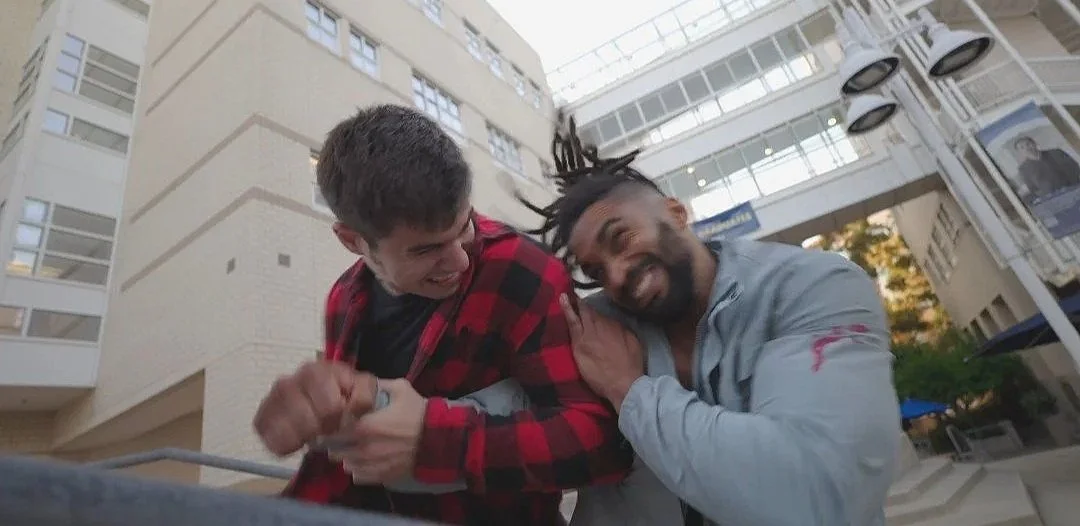
Screenshot of a fight scene we shot, video linked in image
One of the most common pieces of advice I’ve heard from big-name coordinators and action choreographers at workshops and on the job is: “just get together with some friends and shoot something!”. As someone who already works in the industry but definitely has room for improvement, I’ve set out to do just that. For the last couple of months, I’ve been putting together my own little collective of stunt people and film enthusiasts to throw together scenes and previzes with the intent of sharpening our skills and bolstering our reels, and it’s been excellent. With that, though, I want to discuss what it takes to just “get out there and make something” for anyone who’s been thinking of doing something similar.
My experience
Since I’ve come from the school of thought that everyone should be multifaceted in their skillsets, I came in with a pretty solid knowledge base of stunt choreo, wreck technique, and action design. I started off by finding those in my area with an interest in action cinema and began hosting practice sessions at open gyms, public parks, and eventually at chosen locations for filming. Recruiting from my & others’ workshops, past/current projects, and open gym sessions at Loopkicks SoCal was how I got the first members of our group together. In a way, I was repeating what I’d seen from the likes of DY Sao & Martial Club, but with more streamlined intent.
With workshops, there is always an intro, warm-ups, and then generalized instruction (because you may not know much about the people taking it) before finally getting to the good stuff. Once I had a group with which I was mostly familiar, we could start phasing out intros and making our warm-ups and instruction more specialized for the choreo we’d eventually want to film. This also gave us the chance to take turns understanding the different roles in realizing a fight scene: performer, star, camera, and director/coordinator. It’s crucial to walk in each of these roles’ shoes to better understand the full orchestration of production, even at this smaller scale. This is because when working on small-medium sized productions (esp non-union), someone will almost always be expected to wear many different hats, and if everyone is capable of that, then all the better. On larger productions, it’s rare to have to fulfill more roles than what is asked of you in your contract, but having that multifaceted understanding will still benefit the project as a whole.
One of the most important skills to develop early on for stunts is what I call the Camera Eye (knowing what the camera is seeing in a shot that you’re also in), and that can be easily honed with small group projects. However, something like the Camera Eye also exists for every other aspect of a production. For example: having an intrinsic knowledge of what the final product of an action scene should look like before shooting even begins is a skill that one can develop only by shooting and editing. Typically, we edit with basic cuts to make a montage of all the different clips that becomes a coherent action scene, although there are other options. Let’s take a 24-count choreography and learn different ways of shooting and editing it for different effects:
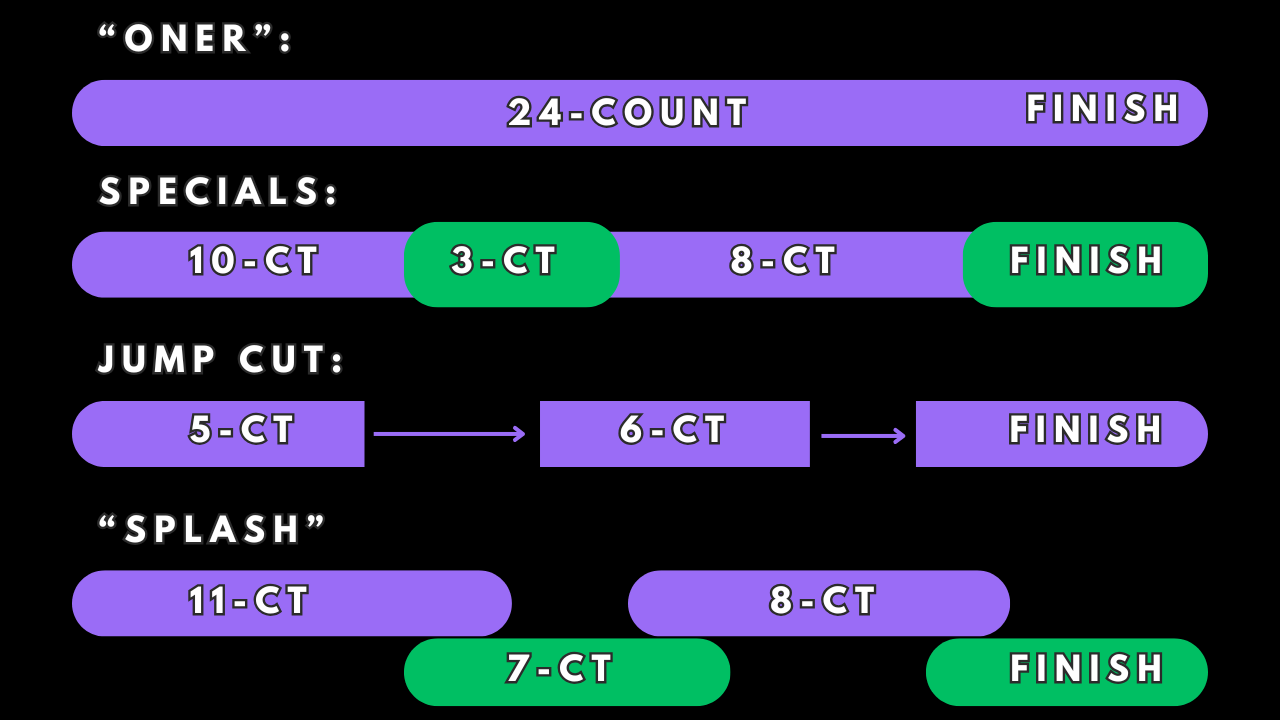
If we want to show off our choreography and camera skills without as much fancy editing, we can shoot a oner in which all of the action happens within the same shot. The camera can stay relatively static, as in Old Boy (2003), or it can move all around to make the audience feel like they’re in the action, as in The Protector (2005). If we want to highlight certain special moves or leave room for some spicy CGI, we leave room for specials, which are nested within the rest of the action. Think of the x-ray shots in the Mortal Kombat games’ scripted sequences. If we want to tell the story with the editing as opposed to the action, we can use jump cuts to create negative space through which the audience can make inferences about what happened. One director who loves to use these is Takeshi Kitano, such as in his film Kikujiro (1999). Last up is the shooting technique I use most often called splashing, essentially just shooting a montage with hella overlap. If I wanted to shoot that same 24ct choreo, the first shot would be beats 1-11, then beats 8-15, then beats 13-21, and finally 19-24. I know this seems incredibly redundant, but the overlaps are a surefire way to make sure the editing process doesn’t hit as many snags that would require reshooting and it preserves the momentum between shots.
I’m not a film professor or anything, but I’ve tested all of these methods and recommend trying all of them out to see what you like and the situations in which they each fit. Also, these can all be done with a phone camera and free app editor, so they’re a great way to learn the fundamentals for when the larger projects come.
currently
Lately, I’ve been blessed to have an awesome team of people nearby who’ve been developing their own passions for action design, so we’ve been meeting up periodically to “just get out there and shoot something” once or twice per month. Funny enough, we’ve shot pretty much everything at either UC Irvine (my alma mater) or at Loopkicks SoCal(our main gym), and I’m pretty pleased with how everything comes out. Shooting at a public university is honestly a hack in & of itself; you’ve got all these different settings, intersting architecture, both open & closed spaces, and there’s usually food/drinks nearby for when you’re done. I think I’d like to try and shoot a scene in every department on campus by the end of summer just because I love all of the backgrounds they provide.
A solid strategy we’ve been employing for the last few videos goes as follows:
Meet up at Loopkicks SoCal to come up with choreo bits which we shoot from a single flat angle. These are typically about one 8-count each
Scout a location & establish a time to meet, taking into consideration daylight, foot traffic, etc.
Arrive on site half an hour to an hour before to block out the choreo, environmental actions, & camera movement
Start knocking out shots in whatever order was established, leaving extra space for lens swaps, pads, etc.
Finish strong & eat as a group!
Here’s an example of us choreographing a bit, then adapting it to our environment for the shoot on location:
Next up
The plan is to move up from shooting casual choreography to full on short films this year. I’m gathering gear, team members, funds so I can pay everyone (I hate free work and refuse to perpetuate that trend), and, of course, additional experience from all of the projects I’ve been doing in the meantime. Having inspiring friends who are also giving it their all to chase their dreams their way is a huge motivation for me, and I have to believe that I can do the same, even with this industry being as discouraging as it is. Luckily for me, going for broke isn’t all that daunting since broke is where I come from, and one’s past is never that far behind them. That being said, I really hope I don’t end up worse off than when I started, but hey at least I can say I did it at the end of the day.
I’ve been attending improv classes for almost a year now, and I’m in the process of finding a good dramatic acting technique class and writing group to strengthen my weaker areas. Building a solid group I can rely on is really the most important piece of the puzzle right now, and ironically, collaboration is one of my most lacking fundamentals. From the charisma and popularity, many assume that I’m a natural leader and people person, and while that might be true, I’ve never enjoyed leadership positions. Beyond that, I’m also the type of person who will just figure something out when confronted with a novel problem/obstacle. It’s served me well in the past, particularly in my youth, but has been to my detriment when it comes to this industry which is all about teamwork. Like anyone else, though, I’m a work in progress and am figuring it out one day at a time… and I even ask for help every now and again.
